HealthRx: Personal Health App
A modern, secure, and intuitive web application for home pharmacy inventory and detailed sickness tracking, built from scratch in record time using the Google Antigravity IDE for rapid full-stack development.
Overview
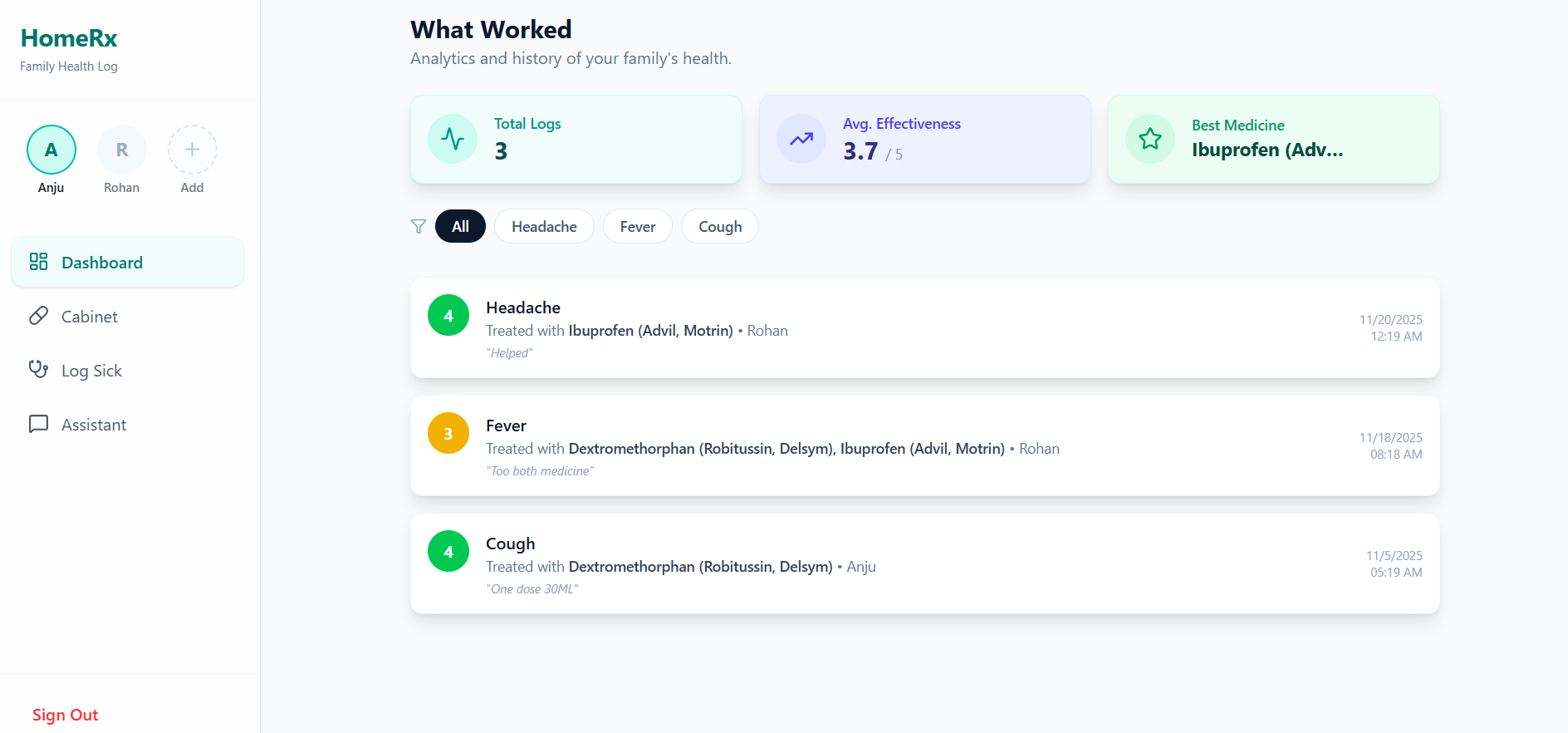
HealthRx is a modern, secure web app for managing a home pharmacy and tracking personal health—built end-to-end in under three hours using the Google Antigravity IDE. It tames the everyday chaos of medicine cabinets and illness history with smart inventory management (expiration and stock tracking), a detailed sickness log, an interactive dashboard for visualizing trends, and an AI Health Assistant that answers questions grounded in the user's own logs and inventory. Built on React 19, Vite, and Tailwind CSS 4 with Firebase for authentication and real-time data, it keeps health information private and encrypted. As creator and full-stack developer, Rohan scaffolded the project, designed the UI, wired up Firebase, implemented the inventory and logging logic, and integrated the health assistant.
The problem
The common chaos of managing medicine cabinets, tracking expiration dates, monitoring stock levels, and maintaining a precise history of illnesses and treatments.
Key features
- Smart Inventory Management
- Detailed Sickness Log
- AI Health Assistant
- Interactive Dashboard
- Secure & Private data
What I did
- Rapidly scaffolded React/Vite project and implemented UI using Tailwind CSS
- Integrated Firebase (Auth, Firestore) for real-time data
- Built complex inventory and sickness logging logic
- Integrated AI Health Assistant
AI under the hood
HealthRx pairs an integrated AI Health Assistant with an AI-accelerated build process. The assistant delivers personalized health insights and answers medical questions by grounding its responses in the user's own sickness logs and medication inventory stored in Firestore—context-aware guidance rather than generic advice. Just as notable is how the app was built: the Google Antigravity IDE acted as an intelligent pair programmer, generating boilerplate, suggesting architectural improvements, and automating git and security checks to take the full stack from zero to deployment in under three hours.